Practical, first-party guidance on starting, maintaining, repairing and extending locs. Use it to prepare and ask better questions; your loctician still confirms what suits you.
Pain, wounds, bleeding, swelling or a suspected serious reaction cannot be assessed through educational content. Seek appropriate medical support for urgent symptoms and contact the salon separately about an appointment.
Explore by question
Guidance for every chapter.
Choose the subject closest to where you are now. Each answer explains what is known and what still needs a personal review.
01
Starting locs
Begin with the right foundation.
A considered start is shaped around the hair in front of the loctician, not a one-size-fits-all method.
What this guidance supports
Hair length, density, desired loc size, expected count and preferred foundation all help shape the recommendation.
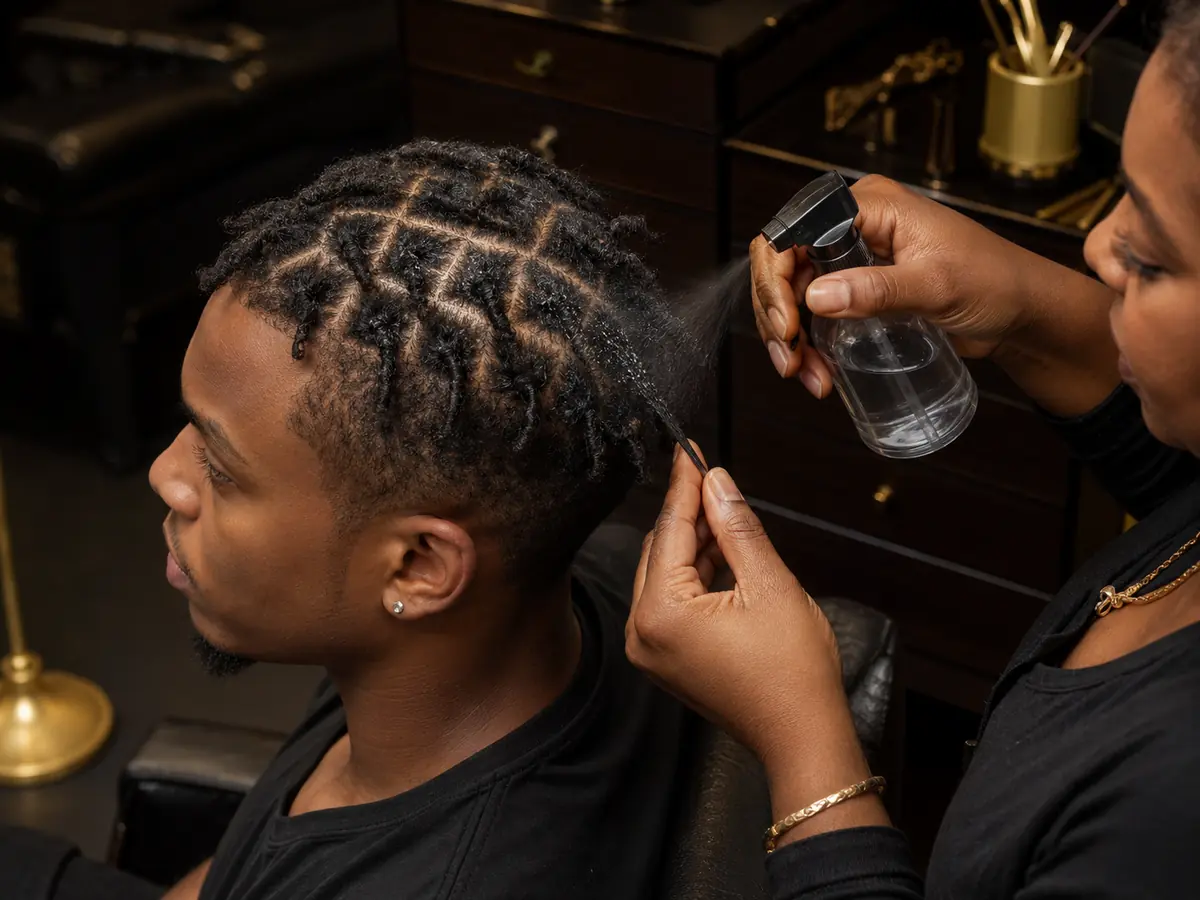
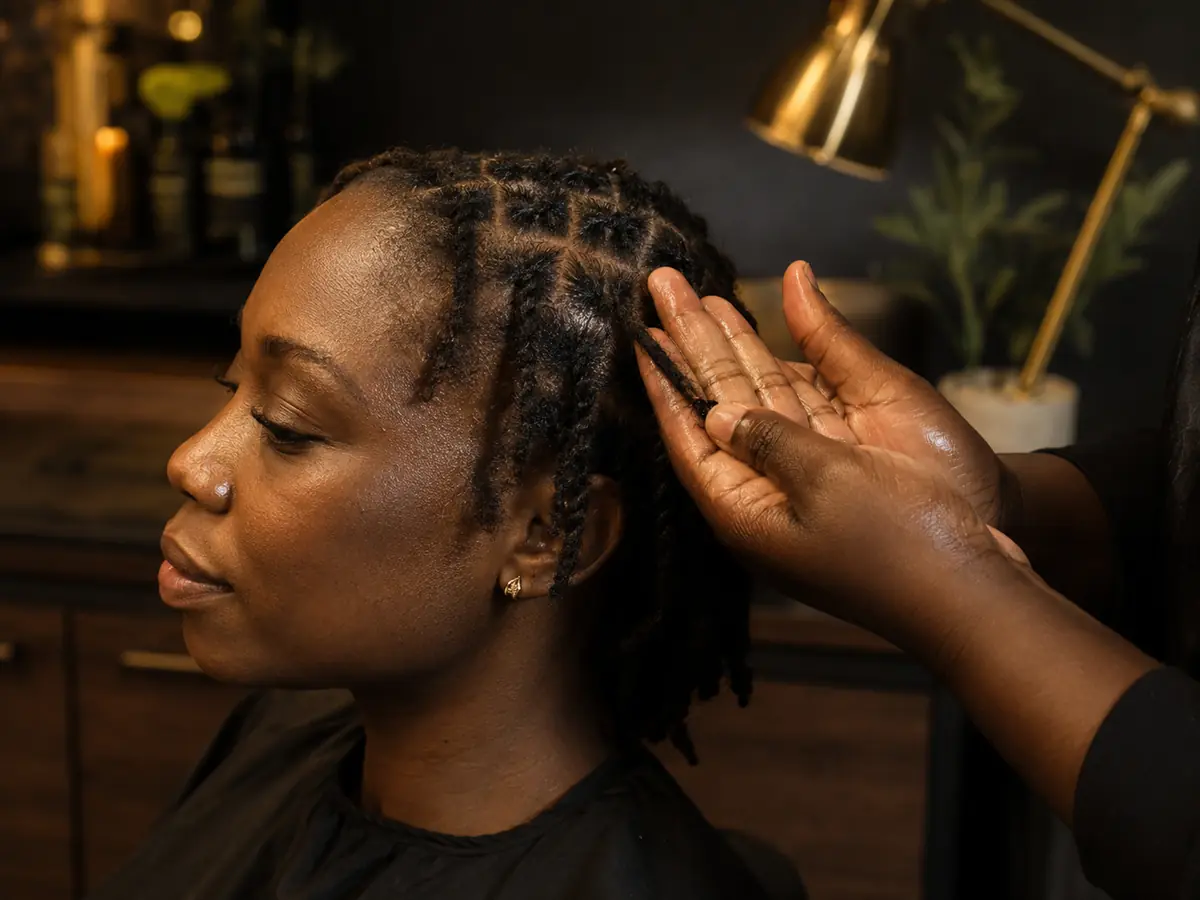
Empress Locs content describes comb-twist foundations for shorter hair and double-twist routes for longer hair.
Instant Locs use your existing hair to create a mature appearance sooner; they are not extensions.
Maintenance is a rhythm, not a universal deadline. Your loc stage and the method used both matter.
What this guidance supports
The public catalogue separates Starter Locs Retwist during the earlier journey from Retwist for mature, formed locs.
Starter education often discusses roughly four to six weeks, while interlock and crochet content often discusses six to eight weeks and sometimes longer in individual cases.
Growth, method, lifestyle and how your locs are responding can all change the timing discussed with your loctician.
Each maintenance method works differently. The right choice depends on your foundation, regrowth, thickness and desired finish.
What this guidance supports
Retwist tutorials emphasise moisture, clean partings, controlled root work and keeping loose hair with the correct loc.
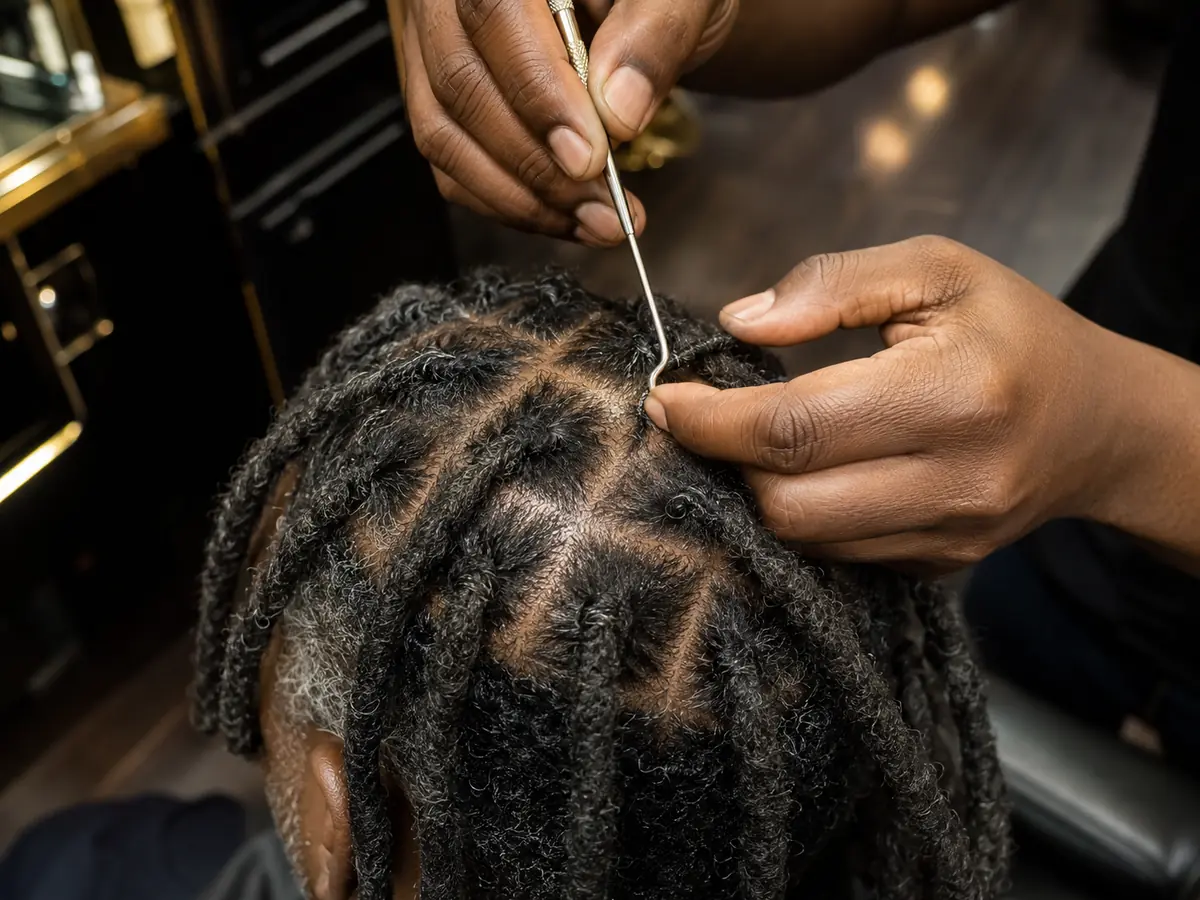
For interlocking, tool choice and direction depend on loc thickness; poor rotation or excessive tension can create holes, bunching, thinning or breakage.
Crochet appointments have their own scope. New-growth work, reinforcement, styling and structural repair should not be assumed to be interchangeable.
A photograph can start the conversation. It cannot make the decision.
Major or uncertain thinning, breakage, detached locs and previous repair work should begin with a Corrective Loc Assessment. The condition, roots, number of locs and desired result all help shape the recommendation and quote.